
"tree products"
20000 article(s) found

A brief introduction to the History and Culture of the Origin and Development of Costa Rica Saint Roman Fine Coffee beans
The coffee trees planted in Costa Rica are all Arabica coffee trees, and the quality of coffee beans is better and more stable through improvement. In order to facilitate picking, coffee trees are kept at a height of about 2 meters through continuous pruning. The coffee that people eat is the taste of the seeds in the fruit that are brewed in water. After picking raw coffee beans, the peel, pulp, seed film and sun exposure must be removed.
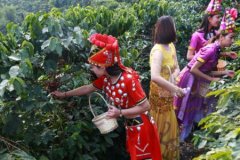
A brief introduction to the history and culture of the origin and development of Costa Rica's Saint Roman boutique coffee beans.
All the coffee trees planted in Costa Rica are Arabica coffee trees. through improvement, the quality of coffee beans is better and more stable. in order to facilitate picking, coffee trees are kept at a height of about 2 meters through continuous pruning. The coffee that people eat is the taste of the seeds in the fruit that are brewed in water. After picking raw coffee beans, the peel, pulp, seed film and sun exposure must be removed.

Boutique Coffee introduction to 53 Coffee producing areas around the World
forty-four. In 1715, the first coffee trees (about 40) were transported from the Yemeni port of Moka to La Runion, but unfortunately only two survived. By 1719, coffee plantations had flourished and the first beans were sold. Over the next few years, the government took a hard measure: the islanders, black and white, had to plant 100 coffee trees a year.

Costa Rica Coffee Tree Types Tara Su Phoenix Manor
Costa Rica grows Arabica coffee trees, which have been improved to make the quality of the beans better and more stable; to facilitate picking, coffee trees are kept at a height of about 2 meters; people eat coffee because the seeds in the fruit are brewed with water. After harvesting, green coffee beans must be removed from the skin, pulp, seed membrane and exposed to sunlight.

Description of Costa Rican coffee bean flavor grinding scale introduction of variety grinding scale in producing area
Costa Rican coffee bean flavor description grinding scale production area variety grinding scale introduced that coffee trees grown in Costa Rica are all Arabica coffee trees, and through improvement, the quality of coffee beans is better and more stable; in order to facilitate picking, coffee trees are maintained at a height of about 2 meters by continuous pruning; the coffee that people eat is the flavor released by the seeds in the fruit soaked in water. Pick

Four forms of growth and production of Ethiopian Coffee
Growth and production patterns: There are four growth production patterns in Ethiopia, and 95% of coffee is produced from these types or systems.

Introducing trees into coffee plantations can increase the yield of coffee beans.
Can you imagine a tree mixed with your coffee? This may not sound like a good idea, but a new study shows that mixed growth of trees and coffee shrubs can increase the number of birds and increase coffee production. One of the main risks for bean growers is the coffee bark beetle, an insect that drills into the coffee beans and lays eggs into them. Recently, in Jamaica
Tree species of coffee
The coffee beans we usually see are red fruits on trees, seeds without peel and pulp. It is a kind of plant, so there will naturally be different tree species, just as there are many kinds of apples.

Coffee bean varieties: the historical cause and classification of cocoa bean varieties are explained in detail.
Morphological characteristics of the trunk: up to 12 meters high, trees, wide branches, branchlets brown pubescent. The trunk is solid and the cacao trunk has a luxuriant crown. Leaves: alternate, elliptic, leathery, 20-30 cm long, slightly stellate hairy on veins. Flowers: old cauline flowers, blooming directly on the trunk or main branch, about 1.8 cm in diameter; Calyx pink, smelly. 5 deep cracks; petals 5, lower sunken helmets

Four forms of growth and production of Ethiopian Coffee in Coffee producing area
Growth and production patterns: there are four growth production patterns in Ethiopia, and 95% of coffee is produced from these types or systems. 1. Forest grows in southern and southwestern Ethiopia, mostly wild or under natural forests. It provides natural shade for coffee trees, but the resistance is slightly weak. This production system accounts for about
Major Coffee producing areas in the World (1)
Coffee production zones (commonly known as coffee belts) range from 25 degrees north latitude to 30 degrees south latitude, covering many countries in Central, West Africa, the Middle East and South Asia, the Pacific, Latin America and the Caribbean. The reason why coffee cultivation is concentrated in this area is mainly due to the limitation of temperature. Because coffee trees are vulnerable to frost, neither north nor south latitude is suitable, especially in the tropics.
Coffee knowledge
Coffee is a kind of drink, which gives the public the impression that it is black, bitter, sleepless and excited. The coffee beans we see in the coffee shop are tea-brown, which belongs to roasted coffee beans, while the color of the coffee liquid is amber.

What does the tree species of coffee look like?
The coffee beans we usually see are red fruits on trees, seeds without peel and pulp. It is a kind of plant, so there will naturally be different tree species, just as there are many kinds of apples. There are two main categories visible in the market: Arabica and Robusta (rough flavor, caffeine more than twice as high as Arabica, not a boutique coffee variety. But in recent years, India

Twelve famous high-quality coffee producing areas in the world
two。 The Ethiopian coffee tree originated in Ethiopia (Ethiopia). It was originally a wild plant here, and the name coffee comes from the Ethiopian town of Kaffa. Humans may have known how to grow coffee trees as early as the 9 th century. Almost everyone knows that Jamaica Blue Mountain Coffee is the most expensive coffee in the world. In 1725, Nikolai

The Tree species of Coffee Han Huaizong teacher "Coffee"
The coffee beans we usually see are red fruits on trees, seeds without peel and pulp. It is a kind of plant, so there will naturally be different tree species, just as there are many kinds of apples. There are two main categories visible in the market: Arabica and Robusta (rough flavor, caffeine more than twice as high as Arabica, not a boutique coffee variety. But in recent years, India
The status and culture of coffee beans that saved Guatemala's economy in Guatemala
Professional barista exchanges, please pay attention to coffee workshop (Weixin Official Accounts cafe_style) This time, I show you the coffee industry in Guatemala. Guatemala's first president, Rafael Carrera, started coffee cultivation in Guatemala. Guatemala has many high places that are ideal for growing coffee. In coffee farming, it is said that soil

Brief introduction of Tarasu Fire Phoenix Manor, a Coffee Tree species in Costa Rica
In this coffee producing place, coffee of all grades and types accounts for 1/3 of the global consumption. Costa Rica, which has a share in the global coffee market, grows coffee trees grown in Arabica. Through improvement, the quality of coffee beans is better and more stable; in order to facilitate picking, coffee trees are maintained at a height of about 2 meters by continuous pruning; the coffee people eat is fruit.

Do you understand so many varieties and places of origin?
In the world of bulk trade, in addition to our common varieties such as soybeans, steel, crude oil and non-ferrous metals, there are also many varieties that are not often heard of, but the trade volume is also very large, such as cocoa, coffee and so on. The word coffee comes from the Greek word Kaweh, which means strength and enthusiasm. Coffee tree is a small evergreen tree of Rubiaceae. Coffee beans are used for daily drinking.

Ethiopia, a big producer of coffee beans, has reduced production. What will happen in the future?
A lot of the coffee we drink today is made from Arabica beans. Ethiopia is not only an important producer of Arabica coffee beans, but also the largest producer of Arabica coffee beans in Africa, with 15 million people living on it and an important economic pillar. But climate change, such as rising temperatures and reduced rainfall, is affecting the coffee bean industry step by step. NPR reports that

What are the varieties of coffee trees in China?
What are the varieties of coffee trees in China? Robasta coffee trees are native to Madagascar in central and western Africa and Indonesia in Asia, accounting for about 20% to 30% of the world's output. Robasta coffee tree is suitable for planting in the lowlands below 500 meters above sea level, has strong adaptability to the environment, can resist bad climate, resist the invasion of diseases and insect pests, and is suitable for soil preparation and removal.